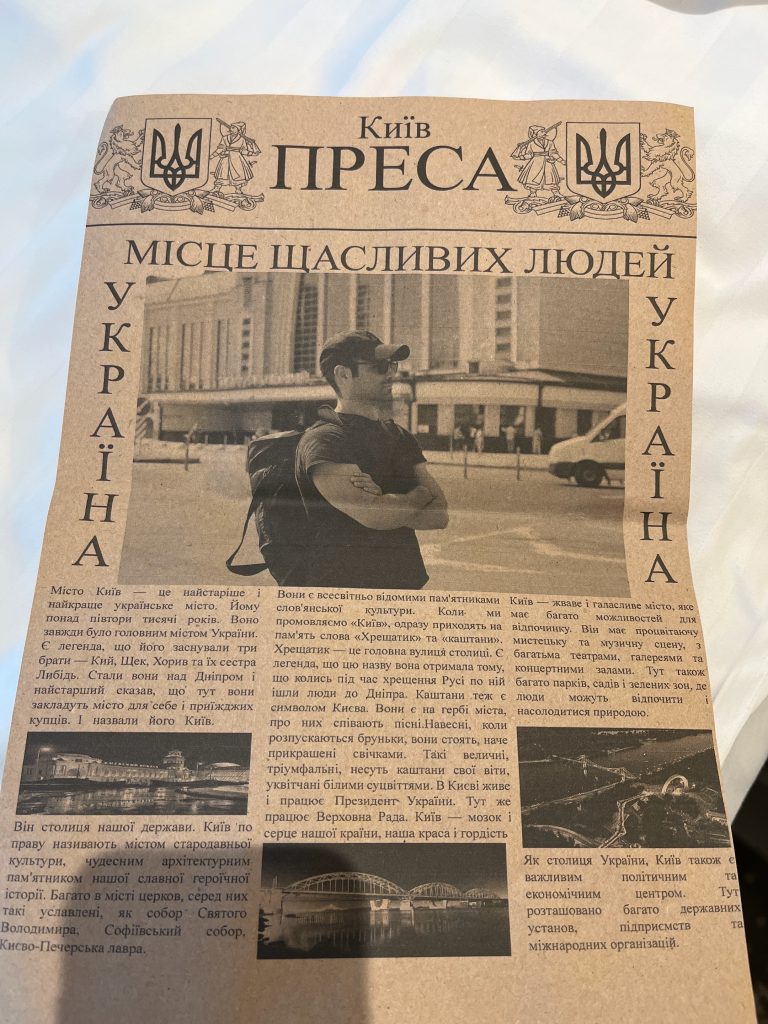
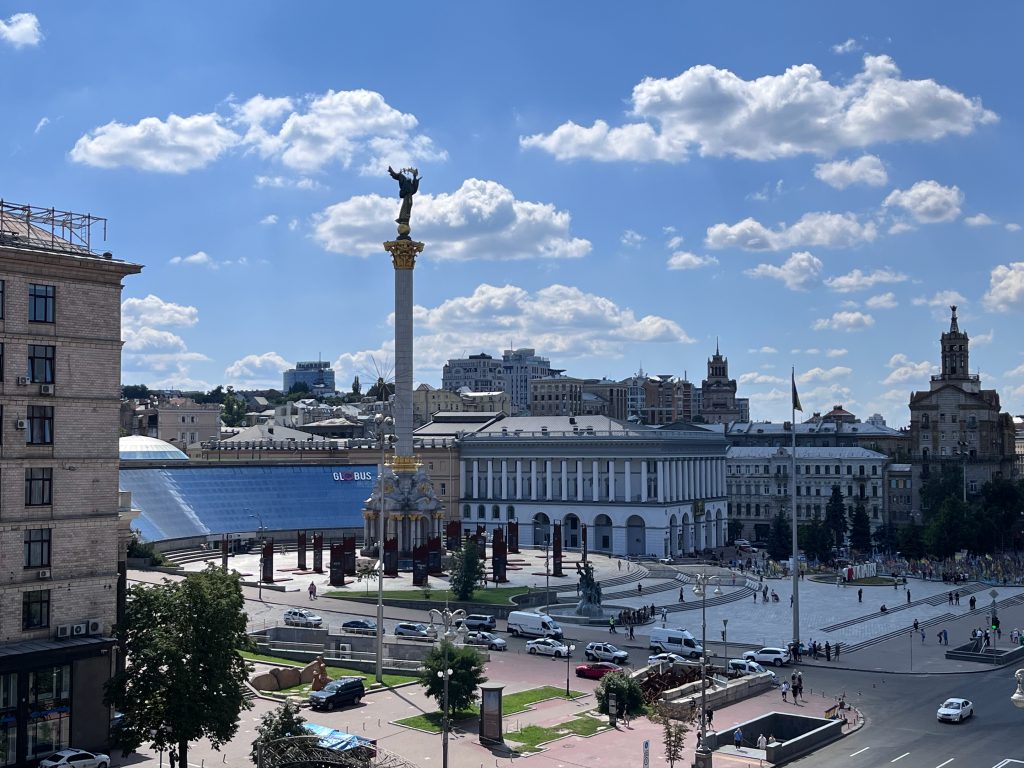
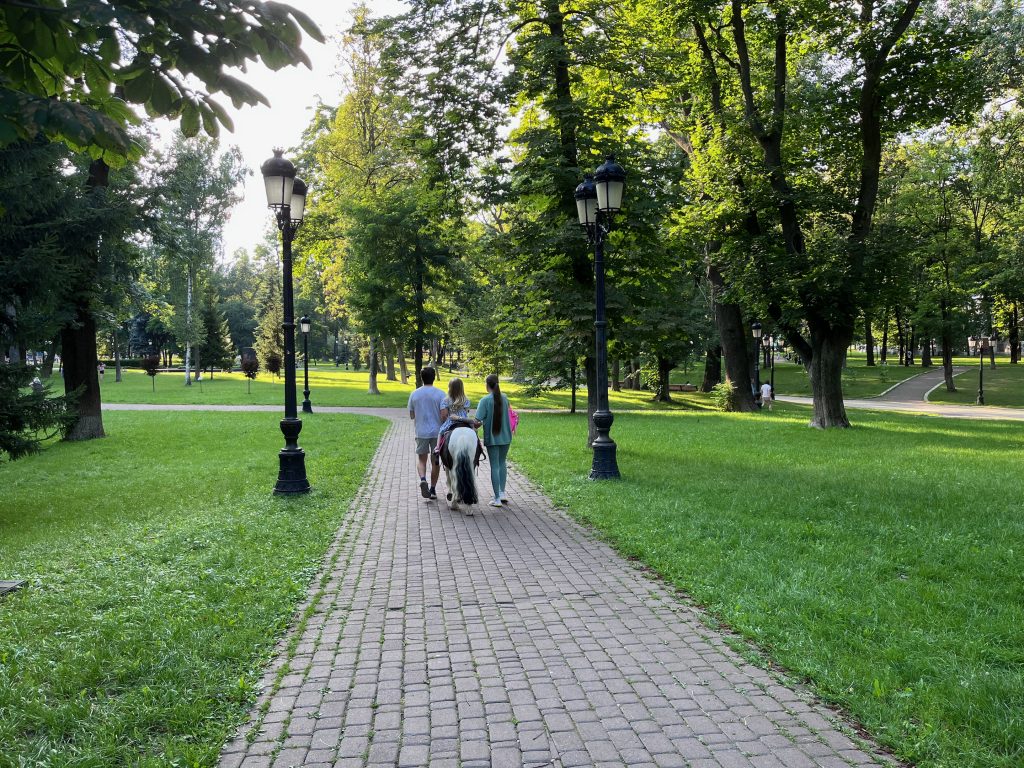
The air raid sirens went off, and I stepped onto my hotel balcony. From there, the Maidan Nezalezhnosti before me, half-empty, half-indifferent. People walked as if the deafening sound were routine. It was, it still is. Hours earlier, stepping out of Kyiv’s train station, a boy asked to take my photograph. When I agreed, he handed me a fake newspaper he printed out with my image under the headline, “Ukraine is for Happy People”. I bought him and his friend a coffee in appreciation. Resilience and hope in Kyiv are palpable, palpable through a teenage photographer greeting a stranger while drones approach the city, and artillery thunders only a few kilometers away. Every night, one can hear the anti-air systems fight off the incoming bombs. They sound like machine guns.
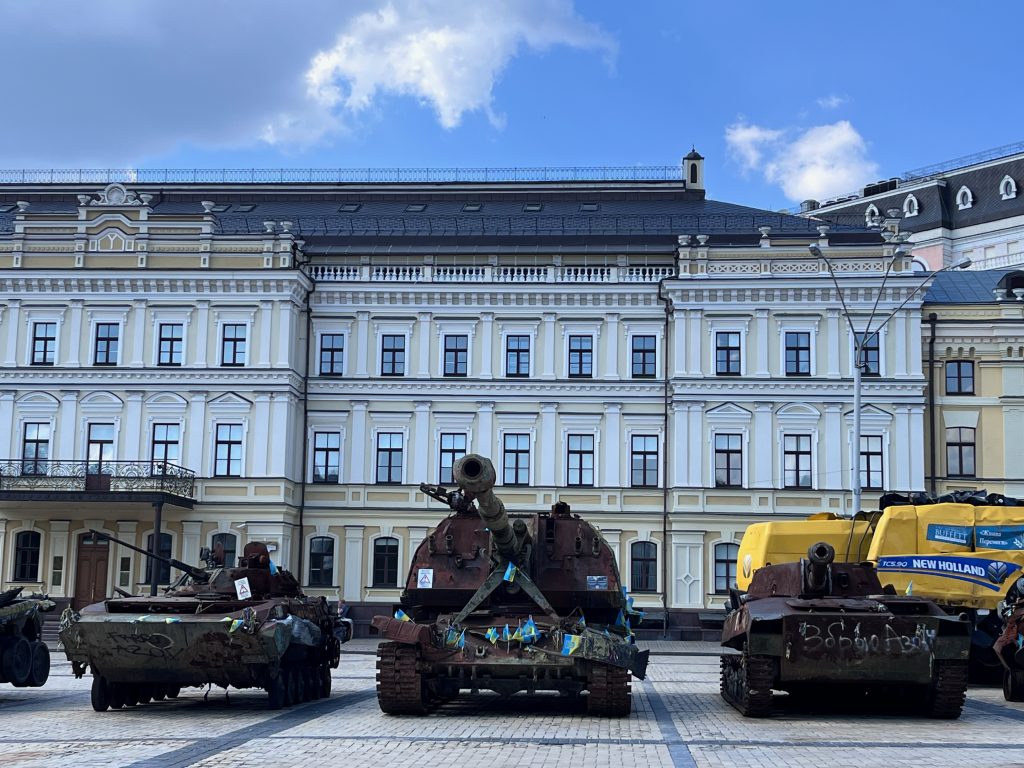
Destroyed Russian tanks decorate city squares. In between two of the many glorious churches in Kyiv, Mykhailivska Square is a spot for one such exposition. The destroyed tanks, flanked by a letter monument in English that spells out “Freedom”, visitors, mostly from other corners of Ukraine, gather. Some take photographs, others accept a blue and yellow bracelet from a woman. On a Sunday, I noticed women leaving churches in tears, perhaps praying for loved ones.
Kyiv mends its wounds in melancholy, but with pride and righteousness. The night before, thirty-one people were killed by Russian bombs. Yet on this day, the cafes were open, the craftsmen put up their tents, the bartender poured the horilka; the city persevered. In one metro station, which are used as bomb shelters, a trio of musicians played Bach. Commuters listened, defiance in its purest form, a city proving it was still alive.
Kyiv is very much breathing, the way a bruised body does through cracked ribs.